Header Logo
Diagnostic Newsletter Blog Contact
Workshops
Design Principles for Analytics
Log In
← Back to all posts

Training Isn’t Enablement

Jan 27, 2026
Connect

Most companies don’t have a skills problem.
They have a training illusion.

They train people. Then they expect capability.

The real problem

The symptom is easy to spot.

Business users start saying:

  • "That’s not what I asked for"

  • "It’s too late now"

  • "Not another workshop…"

That’s not feedback.
I think that’s trust collapsing.

The common response is:

Let’s train the data or business team.

But the real problem is not the lack of training.
The real problem is the absence of a role-based learning path that turns training into behavior.
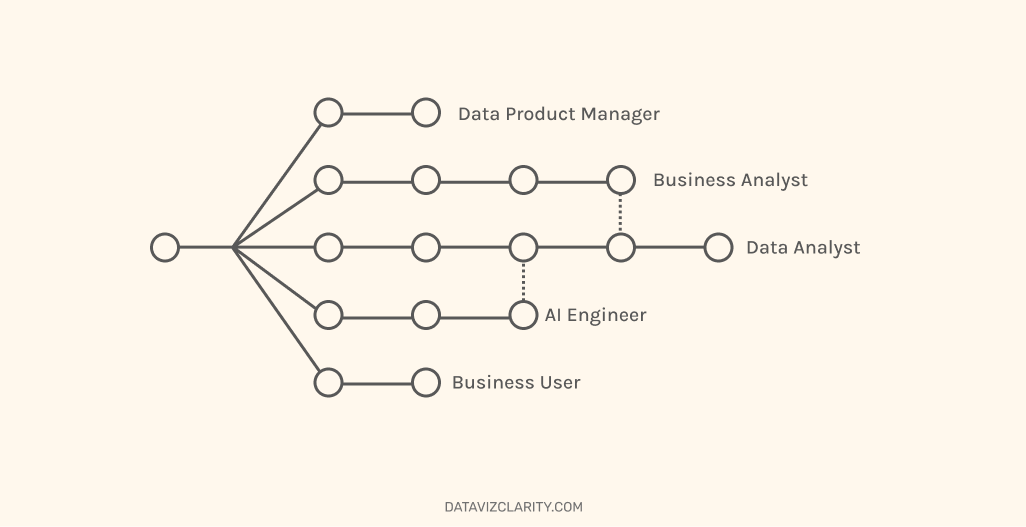
Example for a French major retail group - Analytics and AI Enablement

Most training programs are:

  • too long
  • too generic
  • too disconnected from day-to-day work
  • and too spaced out to create momentum.

So teams learn (a bit).
But they don’t change.

Why this is expensive

1. You pay for the same training multiple times.

I’ve seen teams repeat the exact same course 3 times in 3 years because practice never followed.

2. You create certified beginners.

People leave the training motivated… then return to their backlog and forget 80% within weeks.

3. You burn your analytics ROI.

Tools, licenses, platforms, governance, none of it matters if the human layer doesn’t progress.

It’s an enablement failure.

A quick corporate example

A BI team is trained in dashboard design.
They love the session. Everyone feels aligned.

Then Monday comes.

No one applies the method, because:

  • the backlog is full

  • the dataset is messy

  • stakeholders keep pushing "quick wins"

  • and no one has authority to slow down and do it properly.

Nine months later, a new training is requested.
Not because the first one was bad.
Because it was isolated.

Training doesn’t create skills. Repetition + feedback does.

If you’re rethinking enablement in 2026, I can help you assess your data practices, enablement, and transformation.

In English and French, oui oui!

 Book a call here


Responses

Join the conversation
t("newsletters.loading")
Loading...
Every analytics product should pass these three tests
*]:pointer-events-auto scroll-mt-(--header-height)" dir="auto" tabindex="-1"> *]:pointer-events-auto scroll-mt-[calc(var(--header-height)+min(200px,max(70px,20svh)))]" dir="auto" tabindex="-1"> During a recent workshop, several participants admitted they didn't know how to judge whether an analytics product was "good". Then I wrote three letters on the whiteboard: Useful. Usable. Used. Fr...
Introducing the Analytics Design Office
*]:pointer-events-auto scroll-mt-(--header-height)" dir="auto" tabindex="-1"> *]:pointer-events-auto scroll-mt-[calc(var(--header-height)+min(200px,max(70px,20svh)))]" dir="auto" tabindex="-1"> I'm excited to introduce a new concept I've wanted to build for a long time. The subscription model has transformed industries like design. I believe it's time to bring the same approach to analyt...
Why analytics workshops fail before they begin + Webinaire in September
*]:pointer-events-auto scroll-mt-(--header-height)" dir="auto" tabindex="-1"> *]:pointer-events-auto scroll-mt-[calc(var(--header-height)+min(200px,max(70px,20svh)))]" dir="auto" tabindex="-1"> One pattern keeps appearing, regardless of the company. A few months ago, I observed exactly the same situation in two completely different organizations. The first one was a large retail company. ...

The Analytics Operating Review

What you’ll get every Tuesday A series of sharp visuals that decode common mistakes in analytics. Fast to read. Easy to apply. Hard to forget.
Footer Logo
Privacy Policy Terms and Conditions
© 2026 Dataviz Clarity